
Where You Don't Have to Perform to be Worthy
Therapy for High-Achievers Done Pretending They Have It All Together
In-person therapy for overthinkers and perfectionists in Greenpoint, Brooklyn.

You wish someone could help you figure this all out…..
You look like you have it all together on paper, but inside, the overthinking never stops.
You’re exhausted from performing, constantly waiting for the other shoe to drop.
You’ve mastered the art of taking care of everything and everyone else—except yourself.

Welcome to
West Therapy Group

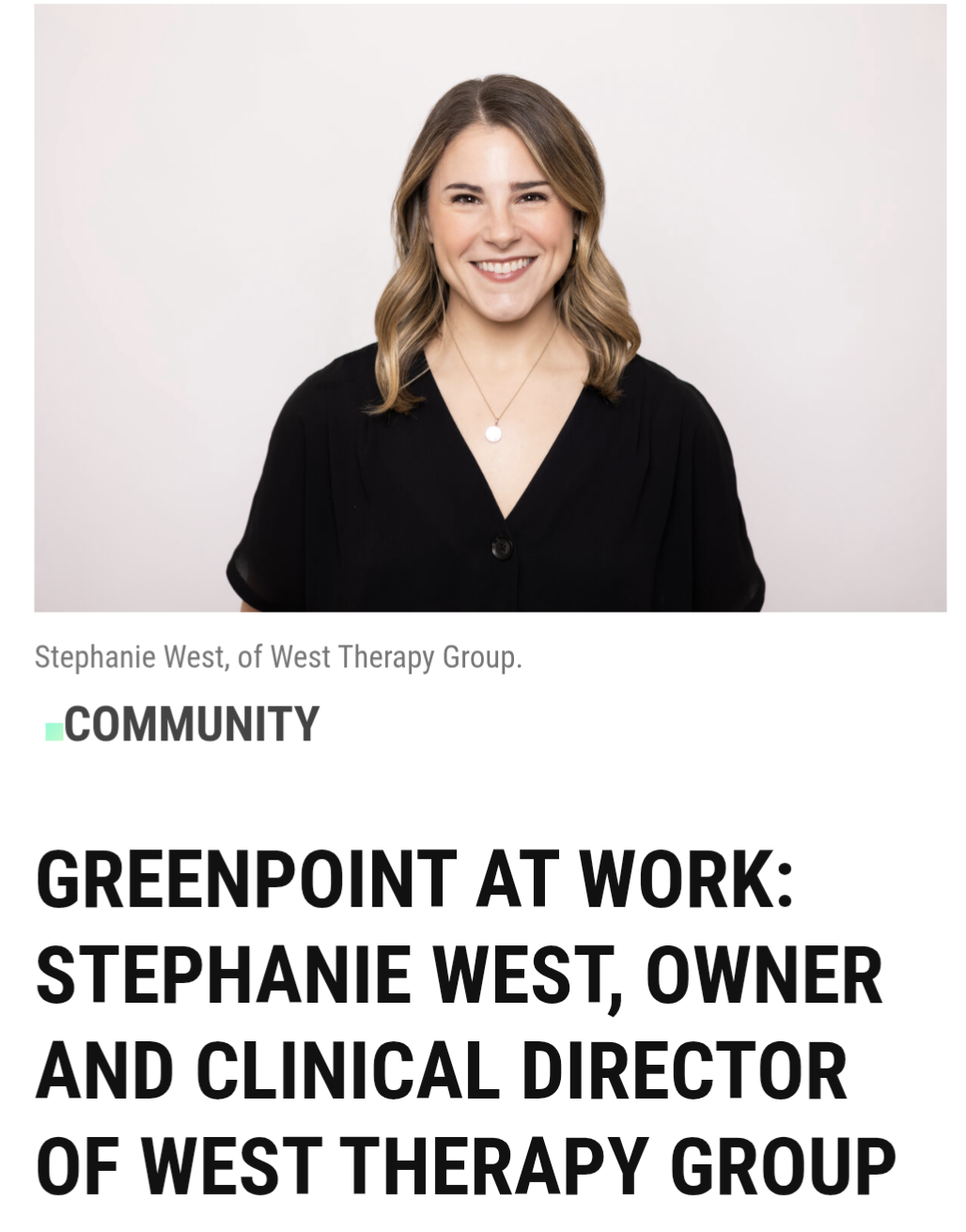
Stephanie West, LMHC-D
Owner | Clinical Director | Therapist | Supervisor
Therapy with us isn't another clinical project for you to optimize, cross off a to-do list, or perfect. It is an active, warm, and collaborative partnership where your external achievements take a backseat to your internal world. Drawing from Psychodynamic and Internal Family Systems (IFS) approaches, we don't just look at your symptoms; we look at the whole picture. Together, we explore the well-intentioned, protective parts of you formed in childhood—the inner critic, the perfectionist, the tireless overachiever—that helped you survive and succeed, but are now leaving you exhausted and disconnected.
Our goal is to help you safely drop the armor you’ve worn for so long. By cultivating a secure, relational space right here in Greenpoint, we look beneath the surface to uncover the root patterns driving your chronic overthinking. We don't sit in sterile silence giving rigid advice; instead, we actively work alongside you to help you understand your mind, heal old burdens, and build a sustainable, authentic baseline. You’ve spent years performing for the world—this is the one space where you are invited to simply show up as you are.

How it Works
Book a free consultation to get started.
We’ll chat via video or phone to see if we’re a good fit.
Then we’ll schedule your first session on the call.

Our Therapists
-

Stephanie West, LMHC-D
Clinical Director & Supervisor
-

Davidson Mobley, MHC-LP
Associate Therapist
-

Sarah Phoenix, MHC-LP
Associate Therapist
-

George Lawson, MHC-LP
Associate Therapist
-

Crystal Chung, Esq., MHC-LP
Associate Therapist
-

Anne-Sophie Devouassoux
Clinical Intern
In-Person, Remote,& Hybrid Options
Our offices are conveniently located off the G train at 861 Manhattan Ave. between Noble and Milton Streets in Greenpoint. Teletherapy is available in all of NY state.
Our Services
-

Individual Therapy
West Therapy Group specializes in treating anxiety, depression, ADHD, and trauma with weekly therapy that is tailored to you. Book a free consultation and begin in-person therapy this week!
-

Couples Therapy
West Therapy Group specializes in couples therapy with weekly meetings tailored to your attachment style, communication skills, and goals for the relationship.
Why Go Out of Network for Therapy?
When you use your out-of-network benefits, your clinical care remains entirely in your hands. Most PPO insurance plans reimburse between 50% to 80% of our session fee after your deductible is met, meaning you get the premium, specialized care you need without the compromises of standard insurance networks.
Navigating insurance can feel overwhelming, so we make it seamless: we provide you with a monthly, itemized invoice (a "superbill") or can submit the claims directly on your behalf. You don't have to sacrifice quality or privacy to get the support you deserve.

Maximum Privacy, Better Fit, and Faster Healing.

As featured in
-
![A woman with short curly hair wearing a yellow top and beige pants, smiling while holding a phone, outdoors with blurred cars in the background.]()
Gothamist
-
![Headshot of a woman with shoulder-length blonde hair wearing a black top and a necklace, smiling against a plain light background.]()
Greenpointers
-
![Two women sitting at a table with open notebooks, two glasses of red wine, and a plate of sausages, engaged in a discussion, with a blurred close-up of a dish of sausages in the foreground.]()
Redfin